Different Explanatory Variables in One Study
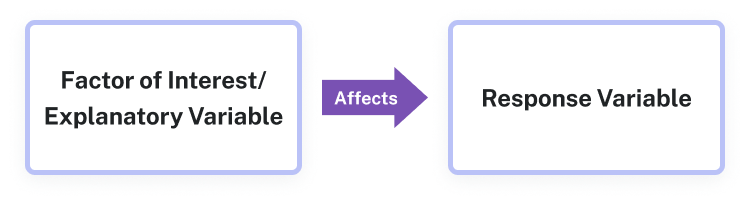
The treatments are the different levels of the factor of interest, or explanatory variable, that you are changing. For example, if the factor of interest is a vaccine, the treatments might be vaccine vs. no vaccine.
nuisance factors
Nuisance factors are variables that could affect the response variable but are not what the study is investigating. These factors are NOT of interest in the study, but may affect a change in the response variable.
Researchers keep these variables constant (the same for everyone) to prevent them from interfering with results. For example, when testing if music affects concentration, researchers might have everyone take the test at the same time of day (controlling time as a nuisance factor) since time of day could also affect concentration.