Experimental and Control Groups
An important aspect of all experiments is a comparison between one or more groups or levels of the factor of interest. These comparisons are called treatments. In a simple experimental design, one group receives the researcher’s treatment and the other group(s) does not.
- The group that receives the treatment is commonly called the experimental group.
- The group that does not receive the treatment is usually called the control group.
The control group is usually kept under conditions that are considered typical or common for a given situation.
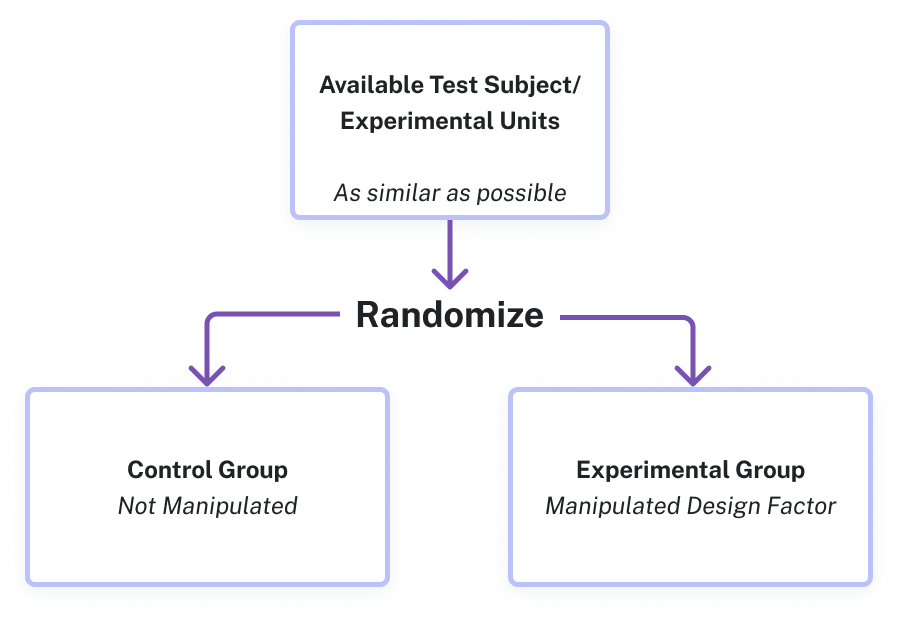
It is important to remember that the only difference between the experimental and control groups is the researcher’s manipulation of the factor of interest.