- Understand conditional probability and Bayes’ theorem
Cancer Testing
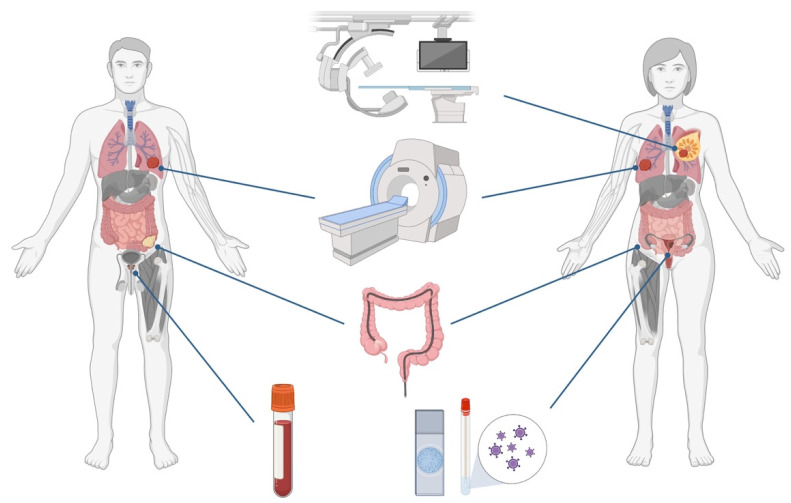
[1]Cancer remains a leading cause of death worldwide, partly owing to late detection which entails limited and often ineffective therapeutic options. Most cancers lack validated screening procedures, and the ones available disclose several drawbacks, leading to low patient compliance and unnecessary workups, adding up the costs to healthcare systems. Hence, there is a great need for innovative, accurate, and minimally invasive tools for early cancer detection.
[2]Globally the share of people with cancer reached 1.3% in 2017. World Health Organization (WHO) believe that these numbers have continued to rise every subsequent year.
The standard test for detecting cancer in a patient is a cancer diagnosis test. These tests have what is known as a sensitivity and specificity rate. These rates provide important information about the test’s accuracy and reliability in detecting or ruling out the presence of cancer.
- Sensitivity rate of the test is the probability of a positive test result when a person actually has cancer. A high sensitivity rate indicates that the test is good at identifying individuals who have the disease (true positives).
- Specificity rate of the test is the probability of a negative test result when a person does not have cancer. A high specificity rate indicates that the test is good at identifying individuals who do not have the disease (true negatives).
These rates are dependent on the type of tests being conducted due to nature of certain cancers being more easily detected than others. This is due to various methods and technologies for detecting the cancer, with some cancers only detectable at certain stages. For example, pancreatic cancer is one type of cancer that is described as a “silent” disease because it frequently does not cause noticeable symptoms in its early stages. As a result, it is often diagnosed at an advanced stage, which can make treatment more challenging.
On the other hand, melanoma, a type of skin cancer, is generally easier to detect in its early stages. This is because melanoma often begins on the skin’s surface, where it can be seen and identified. Regular skin checks and monitoring for changes in moles or the appearance of new growths are important for the early detection of melanoma.
Both cancers highlight the importance of awareness, regular screenings, and early detection efforts in the diagnosis and treatment of cancer.
[3]The world is making slow progress against cancer.
The 5-year survival rates for cancers are increasing, and the research we covered suggests that this is due to both earlier detection of cancers and better treatment that increased survival.