- Describe how psychological disorders are defined, and the challenges in defining them
- Describe the basic features of the Diagnostic and Statistical Manual of Mental Disorders, Fifth Edition (DSM-5-TR) and how it is used to classify disorders
- Discuss perspectives on the origin of psychological disorders
defining psychological disorders
A psychological disorder (also called mental disorder) is a condition characterized by abnormal thoughts, feelings, and behaviors. Psychopathology is the study of psychological disorders, including their symptoms, etiology (i.e., their causes), and treatment. The term psychopathology can also refer to the manifestation of a psychological disorder.
Although consensus can be difficult, it is extremely important for mental health professionals to agree on what kinds of thoughts, feelings, and behaviors are truly abnormal in the sense that they genuinely indicate the presence of psychopathology. Psychologists work to distinguish psychological disorders from inner experiences and behaviors that are merely situational, idiosyncratic, or unconventional.
What Constitutes a Psychological Disorder?
One common way to think about psychological disorders is to focus on experiences and behaviors that are atypical, distressing, dysfunctional, and sometimes dangerous.
For example, feeling disappointed after being rejected for a date is a normal emotional response. However, if a person experiences persistent, intense sadness that interferes with sleep, appetite, motivation, and daily functioning—and includes feelings of worthlessness or suicidal thoughts—these experiences may indicate a psychological disorder.
Importantly, being atypical alone is not enough to define a disorder. Some traits are unusual but not harmful or dysfunctional.
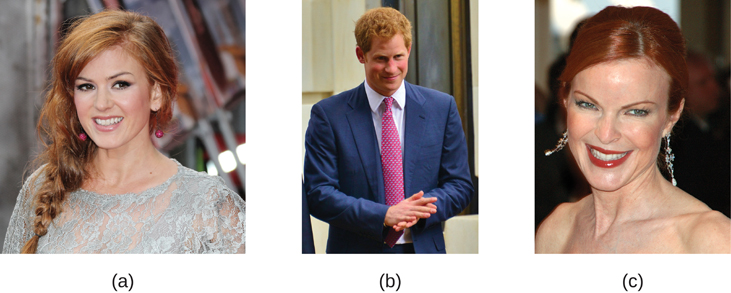
For instance, only about 4% of people in the United States have red hair, making it statistically uncommon (Figure 1). Yet red hair is not considered disordered—just rare. In other regions, such as Scotland, red hair is much more common. Likewise, many psychological characteristics exist on a spectrum, and frequency alone does not determine whether something is pathological.
Cultural Expectations and Psychological Disorders
Another possible criterion for defining psychological disorders is whether a person’s behavior violates cultural expectations. For example, someone pacing a subway platform in a heavy winter coat during summer while shouting obscenities might be seen as behaving abnormally in many U.S. cities.

However, violating cultural norms alone is not sufficient to diagnose a psychological disorder. Culture plays a powerful role in shaping what is considered acceptable, appropriate, or meaningful behavior.
For example, in the United States and many European cultures, direct eye contact is often interpreted as a sign of honesty and engagement. In contrast, in many Latin American, Asian, and African cultures, sustained eye contact may be viewed as disrespectful or confrontational (Pazain, 2010). The same behavior can therefore be interpreted very differently depending on cultural context (Figure 2).
Similarly, hallucinations—such as hearing voices—are typically viewed as symptoms of severe psychological disorders in Western cultures. In other cultures, visions or voices (especially those connected to spiritual or religious beliefs) may be interpreted as meaningful or even valued experiences (Bourguignon, 1970).
Cultural norms also change over time. Behaviors that were once considered typical may later be viewed as unusual, much like past fashion trends that seem strange today. This makes defining psychological disorders an ongoing and evolving challenge.
American Psychiatric Association (APA) Definition
According to the American Psychiatric Association (APA) (2013), a psychological disorder is a condition that is said to consist of the following:
- There are significant disturbances in thoughts, feelings, and behaviors. A person must experience inner states (e.g., thoughts and/or feelings) and exhibit behaviors that are clearly disturbed—that is, unusual, but in a negative, self-defeating way. Often, such disturbances are troubling to those around the individual who experiences them. For example, an individual who is uncontrollably preoccupied by thoughts of germs spends hours each day bathing, has inner experiences, and displays behaviors that most would consider atypical and negative (disturbed) and that would likely be troubling to family members.
- The disturbances reflect some kind of biological, psychological, or developmental dysfunction. Disturbed patterns of inner experiences and behaviors should reflect some flaw (dysfunction) in the internal biological, psychological, and developmental mechanisms that lead to normal, healthy psychological functioning. For example, the hallucinations observed in schizophrenia could be a sign of brain abnormalities.
- The disturbances lead to significant distress or disability in one’s life. A person’s inner experiences and behaviors are considered to reflect a psychological disorder if they cause the person considerable distress, or greatly impair his ability to function as a normal individual (often referred to as functional impairment, or occupational and social impairment). As an illustration, a person’s fear of social situations might be so distressing that it causes the person to avoid all social situations (e.g., preventing that person from being able to attend class or apply for a job).
- The disturbances do not reflect expected or culturally approved responses to certain events. Disturbances in thoughts, feelings, and behaviors must be socially unacceptable responses to certain events that often happen in life. For example, it is perfectly natural (and expected) that a person would experience great sadness and might wish to be left alone following the death of a close family member. Because such reactions are in some ways culturally expected, the individual would not be assumed to signify a mental disorder.
Ongoing Challenges in Defining Disorders
Some scholars argue that no single set of criteria can perfectly distinguish all cases of disorder from non-disorder (Lilienfeld & Marino, 1999). Most people experience anxiety, sadness, intrusive thoughts, or confusing behaviors at times. These experiences become disordered only when they are persistent, severe, dysfunctional, and disruptive.
As a result, psychological disorders are best understood as extremes on a continuum, rather than as clear-cut categories that separate “normal” from “abnormal” people.
Compassionate View of Psychological Disorders
As these disorders are outlined in this module, please bear two things in mind. First, remember that psychological disorders represent extremes of inner experience and behavior. If, while reading about these disorders, you feel that these descriptions begin to personally characterize you, do not worry—this moment of enlightenment probably means nothing more than you are normal. Each of us experiences episodes of sadness, anxiety, and preoccupation with certain thoughts—times when we do not quite feel ourselves. These episodes should not be considered problematic unless the accompanying thoughts and behaviors become extreme and have a disruptive effect on one’s life.
Second, understand that people with psychological disorders are far more than just embodiments of their disorders. We do not use terms such as schizophrenics, depressives, or phobics because they are labels that objectify people who suffer from these conditions, thus promoting biased and disparaging assumptions about them. It is important to remember that a psychological disorder is not what a person is; it is something that a person has—through no fault of their own. As is the case with cancer or diabetes, those with psychological disorders suffer debilitating, often painful conditions that are not of their own choosing. These individuals deserve to be viewed and treated with compassion, understanding, and dignity.